Posts

I set up Serendipity PR & Media in 2009, thinking at that time if I could set up a business during a global recession, I could survive anything. Here in 2026, I am proud to announce that Serendipity has been recognised in the SME News Greater London Enterprise Awards 2026 with two awards:

Best Purpose-Led PR Services Provider 2026

Communications Impact Excellence Award 2026

Being a woman in business has been an adventure, and I had never run a business before. My mum did it, and well, so could I. Nothing prepared me for how tough it would be.

I have learned new skills, added new ones to my every bending bow. I have been in rooms where I have been the only woman, and then the only woman of colour. I have been told that women should not be in business, and had some men talk to my chest instead of my face.

I started my own business for lots of reasons: the global recession, we just started a family, and childcare was extortionate, and with no family to help out, running my own business, working from home, seemed an obvious choice. I made rookie mistakes, from giving my ideas away to not being paid…Yes, I cried a lot and juggled a lot. I had to take our son, aged six at that time, with me to business meetings during school holidays. I used to run everywhere to be on time for school drop-off, school pick-ups, trains, meetings…and I also laughed a lot, usually at myself.

But as the cliché goes, I would not change it. I have met some wonderful people, clients who are now friends, and done amazing things, from getting a client to Glastonbury, doing a private tour of the Tower of London, launches, media hits, serendipitous moments that have blown my mind…and now in this moment, I am enormously quietly proud.

Now I am hoping awards will be like buses and that during the next week, another one will come along and that I win the at the Business Book Awards, but yes, trying to stay grounded.


Photo credit: D William on Pixabay


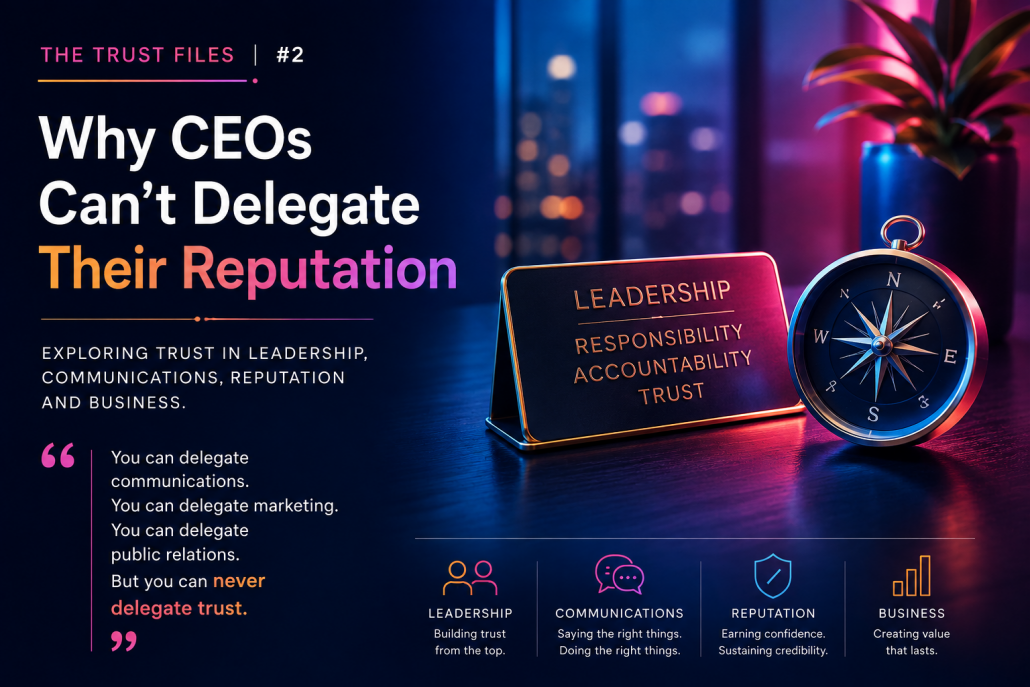
Why CEOs Can’t Delegate Their Reputation


There are some things in business that a CEO simply cannot delegate. Reputation is one of them. Because if you delegate responsibility for your reputation, what happens to trust?

 We have long known the important role CEOs play in employer brand strength and talent attraction. But those of you who might be unconvinced, let me show you some of the data out there:

Return on Reputation, the latest of Hill & Knowlton’s Corporate Reputation Watch studies, conducted with Ipsos published in March 2026, asked 282 financial analysts in North America, Europe and Asia about reputation and its impact on their opinions and ratings of companies.

The survey showed that when asked what specific tangible and intangible factors are very important in making recommendations to invest in a company, “financial performance” was 87%, and following closely behind were “quality of the leadership team” at 86% and “making good on promises” at 85%, which were the top criteria globally. The analysts also placed considerable importance on reputation, with 88% in North America, 91% in Continental Europe, 93% in the UK and 94% in Asia Pacific agreeing with the statement – “a company which fails to look after the reputational aspects of performance will ultimately suffer financially too”.

If this data wasn’t enough to sway you, research from APCO Worldwide published in March 2026 shows that a CEO’s public presence plays a crucial role in purchasing decisions and consumer loyalty. In fact, 79% of Americans say CEO reputation influences their purchasing decisions, while 54% report greater brand loyalty to companies whose leaders are visible and clearly articulate the company’s vision, strategy, and direction. Interestingly, multicultural consumers in the States, particularly Hispanic and Black Americans, report a stronger influence of CEO reputation on purchasing decisions, making CEO visibility a vital strategy for engaging diverse audiences.

The research also found that CEO reputation influences employment decisions, particularly among younger generations, reinforcing the important role CEOs play in employer brand strength and talent attraction.

But data only tells part of the story. We have seen too many examples of CEOs who fail to walk the talk and, in doing so, lose the trust of both the public and their own stakeholders. If you can’t trust the leader of the company that you work for or the brand that you have been loyal to, then what’s left?

Many business leaders don’t understand this principle and try to palm it off to the communications team to implement, to make the statements for them, but that’s when they become unstuck. As they are not leading by example and their statements are not authentic, they are paying lip service to whatever PR statement that their teams issue. It becomes spin, and in a world full of misinformation and fake news, we want to be able to trust the bosses that we work hard for or the brands that we spend our hard-earned cash on.

This disconnect can also be the point at which CEOs take their eye off the ball, where the organisation’s values and ethos become diluted and open to misinterpretation internally, because no one really knows what the CEO is thinking or what they are driving. The end result is that the organisation can find it is inadvertently being called out for greenwashing, misleading the public and its own stakeholders.

So, when a CEO owns their reputation and takes real responsibility, that is when the CEO is really leading. These organisations are better placed to build adaptability and employee loyalty, and to weather challenges, because people know what their business leader stands for and everyone is rowing in the same direction.

Reputations take time to build, but the time it takes gives you a great return. You have invested in your brand identity. You stand for something, and people know that…you become a trusted voice for media commentary, community action and leadership; you also become a role model. You can’t rent out role models.

When you are trusted, people know what you stand for. Your employees understand the direction of the business, your customers know what they can expect from you, and your stakeholders have confidence in your leadership. Reputation becomes part of the value of the organisation itself.

APCO’s research reinforces this point, describing CEO communication as a marker of “credibility and competence” and highlighting its importance in maintaining trust during times of uncertainty.

So, while you can delegate communications, marketing and even public relations, you can never delegate trust.




The Trust Files #1: Why Trust Is the Most Valuable Currency in Business Today

When I worked in the UK government writing ministerial briefings and speeches, every statement and every piece of data had to be verified. Nothing went unchecked. Everyone took responsibility for the information they provided by signing it off, creating a clear chain of accountability.

It wasn’t always the quickest process, and it was long before the convenience of email and instant messaging. But there was a respect for accuracy, attention to detail and the truth.

That experience has stayed with me throughout my career.

Today, when I work with organisations, I occasionally see leaders trying to cut corners. Often it’s done with the best intentions: to move faster, meet deadlines or reduce costs. But shortcuts create opportunities for misinformation, inconsistency and mistakes. Over time, they erode something far more valuable than efficiency: trust.

Trust is one of the greatest assets a business can have. It attracts talented people, strengthens customer loyalty, builds confidence with partners and investors, and protects an organisation’s reputation when challenges arise. It isn’t a communications campaign or a marketing slogan; it’s a business strategy.

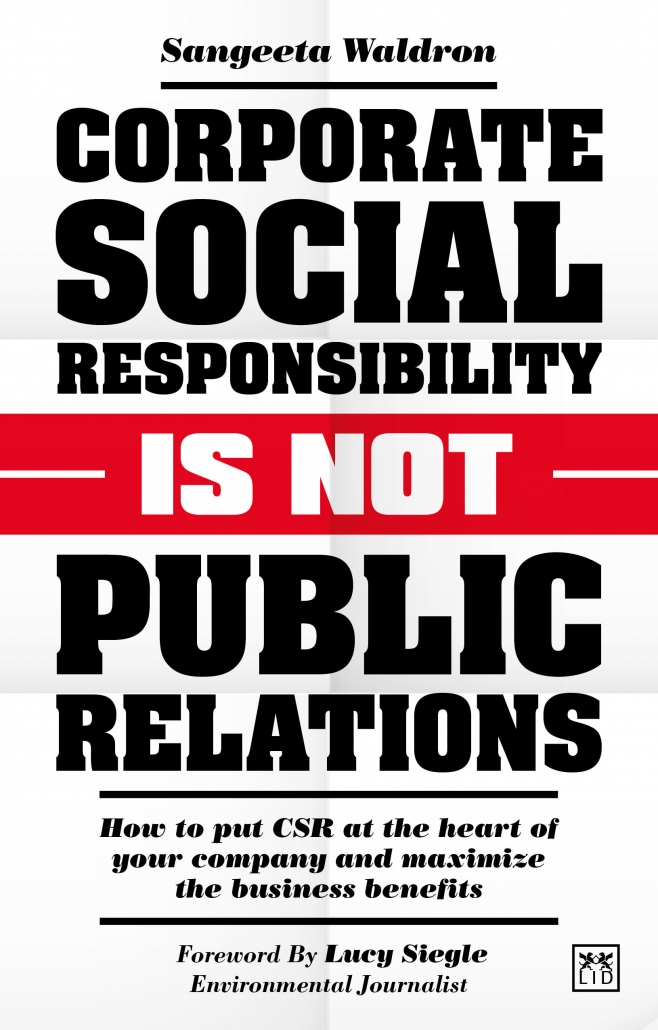
I explore this in my book Corporate Social Responsibility Is Not Public Relations; trust cannot be manufactured. It is earned through consistent actions, transparent communication, and leaders who do what they say they will do.

The good news is that building trust doesn’t have to be complicated or expensive. It requires commitment, clear processes and a culture where accountability is everyone’s responsibility. That means putting frameworks in place, encouraging openness and ensuring that people across the organisation understand not only what the business stands for, but how those values are reflected in everyday decisions.

One area that is often overlooked is internal communication. Organisations spend significant time and money communicating with customers yet forget that trust begins with their own people. Employees who understand the organisation’s purpose, values and direction become its most credible ambassadors. Without that internal foundation, external messaging can quickly lose its authenticity.

Trust isn’t built by one department or one leader. It is created collectively, through thousands of decisions and interactions every day.

Because in business today, trust isn’t just a nice-to-have. It is your most valuable currency.

The Trust Files is a monthly series exploring the role of trust in leadership, communications, reputation, and business.

If someone experienced your organisation today, as a customer, employee or partner, what would make them trust you?

The Trust Files: Why am I writing The Trust Files?


Over the past three decades, I’ve worked across government, global organisations, the private sector and purpose-led businesses. One lesson has remained constant: organisations succeed or fail on trust.

Trust influences reputation, attracts talent, strengthens customer relationships, reassures investors and gives leaders credibility. Yet, despite its importance, it is often treated as something intangible, something that belongs to communications rather than business strategy.

I don’t believe that’s true.

Through The Trust Files, I’ll be exploring how trust is built, how it can be lost and, most importantly, what leaders and organisations can do to earn it every day. Drawing on my own experience, current events and examples from around the world, this series will look beyond headlines to examine why trust has become one of the most valuable assets any organisation can possess.

Because trust isn’t built overnight. It’s earned through the decisions we make, the stories we tell and the actions we take.

Coming next: The Trust Files #1: Why Trust Is the Most Valuable Currency in Business Today.

Purpose-Driven Communication and Sustainable Branding in Global Markets


In today’s rapidly evolving global landscape, purpose-driven communication and sustainable branding have become essential for organisations seeking to build trust, credibility, and long-term influence. As the founder of Serendipity PR, I have always believed that communications should go beyond visibility and that it should create meaningful impact.

Businesses today operate in an environment where audiences expect more than traditional marketing. Consumers, investors, and stakeholders increasingly want to understand a company’s values, environmental commitments, and its broader role in society. This shift has made purpose-led communications and ESG (Environmental, Social and Governance) -focused storytelling central to how organisations connect with global audiences.

Why Purpose-Driven Communication Matters

Purpose-driven communication enables brands to communicate not just what they do, but why they do it. When a company’s mission, actions, and messaging align, it creates authenticity, and authenticity builds trust.

At Serendipity PR, our work focuses on helping organisations clearly articulate their purpose. This means developing strategic communications that highlight genuine commitments to sustainability, social responsibility, and positive change.

Rather than simply adding sustainability language to marketing campaigns, purpose-led branding requires a deeper alignment between business strategy and communications. When done effectively, it strengthens brand reputation, builds credibility, and creates stronger relationships with stakeholders.

Sustainable Branding in a Global Marketplace

Working across international markets has reinforced an important lesson: sustainability and brand purpose must resonate across cultures and regions.

While environmental and social priorities may vary globally, the demand for responsible and transparent organisations is universal. Businesses that integrate sustainability, ESG principles, and responsible leadership into their branding are increasingly recognised as forward-thinking and resilient.

Strategic communications play a crucial role in ensuring that these commitments are communicated clearly and authentically. By tailoring narratives for different audiences while maintaining a consistent global message, organisations can successfully engage stakeholders across markets.

The Role of Strategic PR in ESG and Sustainability

Public relations today sits at the crossroads of brand reputation, sustainability, and corporate purpose. Effective ESG communications help organisations demonstrate accountability while also highlighting their positive contributions.

Through strategic storytelling, businesses can share how they are addressing issues such as:

  • Climate action and environmental responsibility
  • Ethical supply chains
  • Social impact and community engagement
  • Responsible leadership and governance

These narratives not only strengthen brand perception but also inspire wider conversations around positive change.

The Future of Sustainable Communications

Looking ahead, the future of global communications will be defined by transparency, responsibility, and purpose. Organisations that integrate sustainability into their business strategy and communicate it authentically will be best positioned to thrive in an increasingly values-driven marketplace.

For me, communications has always been about storytelling. But the most powerful stories are those rooted in real action and genuine impact.

At Serendipity PR, our mission is to help organisations tell those stories; stories that connect with global audiences, inspire trust, and contribute to a more sustainable future.


Photo Credit: https://sustainability-directory.com/ 

The Cultural & Social Impact of Inclusive CSR Practices Across Diverse Global Communities

Corporate Social Responsibility (CSR) has changed dramatically over the years, especially during the global pandemic. What was once often treated as a marketing exercise or philanthropic add-on has become a critical part of how organisations operate, lead, and engage with society. Throughout my career, I have always focused on advocating for CSR practices that are not only responsible but also inclusive and culturally aware.

In my book, CSR Is Not PR, I explore the importance of moving beyond performative corporate messaging and towards genuine responsibility. Businesses today operate across borders, cultures, and communities, and because of this, CSR needs to be rooted in authenticity, cultural understanding, and a real commitment to social impact.

Why Inclusive CSR Matters

One of the key themes in my work is the importance of inclusivity in CSR. When companies expand internationally, they often encounter communities with very different social structures, cultural traditions, and priorities. A one-size-fits-all CSR strategy rarely works.

Organisations need to take the time to understand the communities they are operating in, which means listening to local voices, engaging with community leaders, and recognising the diversity within those communities. Inclusive CSR is about ensuring that initiatives are relevant, respectful, and genuinely beneficial for both parties.

When businesses involve local stakeholders in shaping their initiatives, they build trust and create programmes that are far more impactful and sustainable.

The Role of Cultural Intelligence in CSR

It is also important for companies to develop greater cultural intelligence in their CSR strategies. Cultural awareness is not simply about avoiding mistakes; it is about recognising the richness and diversity of the societies they are interacting with and considering the cultural context of their actions. CSR programmes should reflect local values and social realities rather than imposing external frameworks that may not resonate with communities.

In CSR Is Not PR, I discuss how meaningful CSR requires businesses to move away from superficial branding exercises and instead embed responsibility into the heart of their brand and corporate culture. When companies genuinely understand the local areas in which they operate, their initiatives become far more powerful and effective.

Creating Meaningful Global Impact

CSR has always been about long-term impact. Responsible businesses have the potential to support communities, contribute to social progress, and address global challenges. But this only happens when CSR is approached with authentic commitment.

Over the years, I have worked with organisations to help them think more strategically about their social impact. This includes encouraging transparency, accountability, and sustained engagement with communities rather than short-term campaigns designed primarily for visibility. True CSR requires businesses to ask deeper questions about their role in society and how they can contribute positively to the world around them.

Looking Ahead

As global challenges continue to evolve, the need for responsible corporate leadership has never been greater. I firmly believe that businesses can be powerful forces for good when they embrace inclusive and culturally informed CSR practices.

My work continues to focus on helping organisations understand that responsibility is not simply about reputation. As I explain in CSR Is Not PR, CSR should be embedded in how a company thinks, operates, and engages with the world.

When businesses commit to authenticity, respect cultural diversity, and genuinely collaborate with communities, CSR becomes more than a strategy; it becomes a pathway to lasting social impact.

Apologies…

Apologies the last few months have run away with me and with good reason. I completed the manuscript for the third book I was writing…a book that took me over a year and a half to write. What Will YOUR Legacy Be? – Conversations With Global Game Changers About The Climate Crisis will be out on 30 January 2025. I then returned from Milan in November, where the pro planet film I was representing at FICTS, which is an event for film television and sports – won an award!  FICTS is closely associated with the Olympics. The film project I was part of, cleverly tied water sports with marine conservation, where we combined the power of storytelling with sustainability and sport.

As soon as I was back from Milan, a couple of days later Serendipity PR was at the Business Show, where we also hosted a lunchtime session speaking about why the business community needs to be thinking about its sustainability initiatives. It was busy at the Show and there was a definite buzz. Companies want to do the right thing and be authentically sustainable. There is a real drive to do better.

I have also been working on an initiative looking at the relevance and importance of local newspapers, media, and journalism with City Hall. This is a really interesting project, because those who know me, will know that I believe in the importance of local newspapers, which I regard as the backbone of communities, providing independent information about what is going on in local areas. Sadly, with the advent of social media, we have seen a decline in local newspapers in the UK, even the London Evening Standard now only has an online presence where much of the news is curated by artificial intelligence. There are very few local newspapers with a real editor left, who reports on the ground. I believe we need to recognise local journalism as an important part of community life and invest in this mechanism of information, which counteracts misinformation and disinformation. This will be ongoing work.

As I furiously type to get this posted in time for Christmas, let me say this…2024 has been a year of lots of opportunities, where a variety of seeds have been sown for 2025…where next year will be a flourishing garden of interesting initiatives, announcements, and celebrations. Stay tuned and Merry Christmas!


The Body Shop


I was sad to read that The Body Shop is facing a crisis and that its new owner, the third in seven years! – is expected to put the retailer’s UK business into administration. Aurelius, the private equity firm that bought The Body Shop for £207m in November 2023, took the drastic decision after poor sales during the all-important Christmas shopping season seeped into January. No one knows what this means for The Body Shop’s 200 stores across the country but am sure many will have to close.

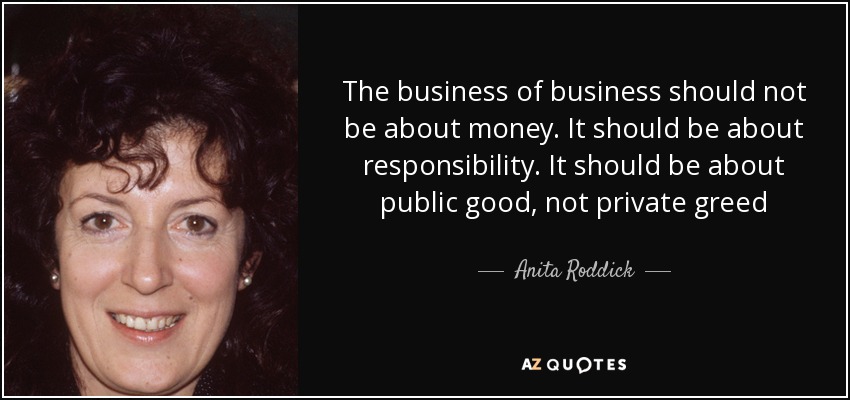
The Body Shop was set up by the pioneering late Dame Roddick in 1976, which was talking about ethical products, recycling, and refilling, way back then, which has inspired the beauty sector of today. I love the Body Shop and what Anita stood for, so much so that I included both in my last book, Corporate Social Responsibility Is Not Public Relations, and managed to grab a conversation with the magnificent Löis Acton who was mentored by Anita, through a stroke of serendipity.  It’s a magical way that they met, and if you have read any of Anita’s books, it’s so typical of Anita.

In the 1980’s the Body Shop was popular, and there were so many of us in love with the White Musk perfume, the peppermint foot lotion, body lotions, and banana shampoo, which all became Christmas stocking staples. So, how did a brand that was so relevant become irrelevant?!

Well, I think the late Dame Anita Roddick can answer this, as she once said, “Be courageous. It’s one of the only places left uncrowded.” She also said, “If you do things well, do them better, be daring, be first, be different, be just.” Finally – “One of the most intriguing things in management and business is the role of storytelling – people need the anecdotes to do the work that they do.”

And that is what I believe went wrong with The Body. All its various owners lost the connection with its community, it stopped innovating, being different, and courageous and stopped storytelling, it rested on the laurels that Anita built, and it got lazy. Brands need to evolve and inspire; they need to make us want them.

But Anita created something more than a brand, she woke us up to being conscious consumers, about fair trade, what was happening to the planet, about having purpose and being ethical, and so much more. So, I will let Anita have the last word on this…


Shedding Light on The Challenges Marketing Teams Face On Their Net Zero Journey

I was privileged to be part of a panel discussion with experts on 6 December 2023, where we shed light on the challenges sales & marketing teams in B2B organizations face on their journey to Net Zero – based on the latest business research commissioned by Hattrick in partnership with The Carbon Literacy Trust.

We delved into some of the complexities businesses are navigating and discussed what’s needed for organizations to make genuine progress on their sustainability journey.
Facilitated by Josh Pitman from Priory Direct, the panelists were:
– Phil Korbel, Co-founder/Director of Advocacy at The Carbon Literacy Project
– Sangeeta Waldron, Founder/Owner of Serendipity PR & Media and author of the acclaimed book ‘Corporate Social Responsibility is not Public Relations’
– Christos Tsaprounis FCIPD (he/him), People & Culture Leader, Auto Trader UK
– And Malin Cunningham, Founder/Owner of Hattrick | B Corp™ certified
You can watch here:

Download the report here!

Podcast – Where Does It Come From


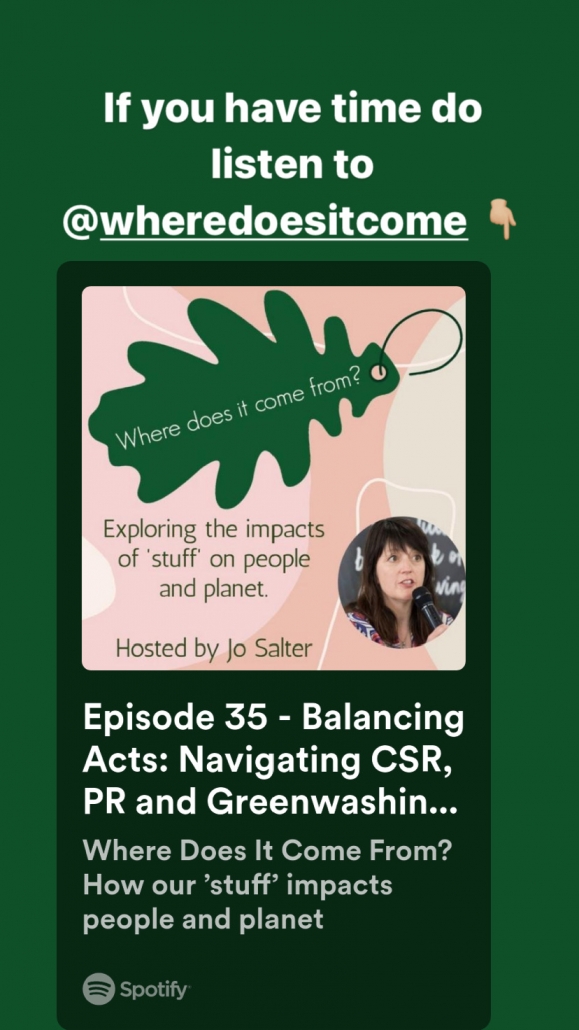
They say there’s no rest for the wicked and it’s true! Soon after the Business Show, I did a podcast conversation with Jo Salter, host of the Where Does It Come From podcast about greenwashing, corporate social responsibility (CSR), fast fashion, the power of local communities, fake news, and of course my book, CSR Is Not PR.

So if you have time, do have a listen to my dulcet tones and let us know what you think!