Posts

The Cultural & Social Impact of Inclusive CSR Practices Across Diverse Global Communities

Corporate Social Responsibility (CSR) has changed dramatically over the years, especially during the global pandemic. What was once often treated as a marketing exercise or philanthropic add-on has become a critical part of how organisations operate, lead, and engage with society. Throughout my career, I have always focused on advocating for CSR practices that are not only responsible but also inclusive and culturally aware.

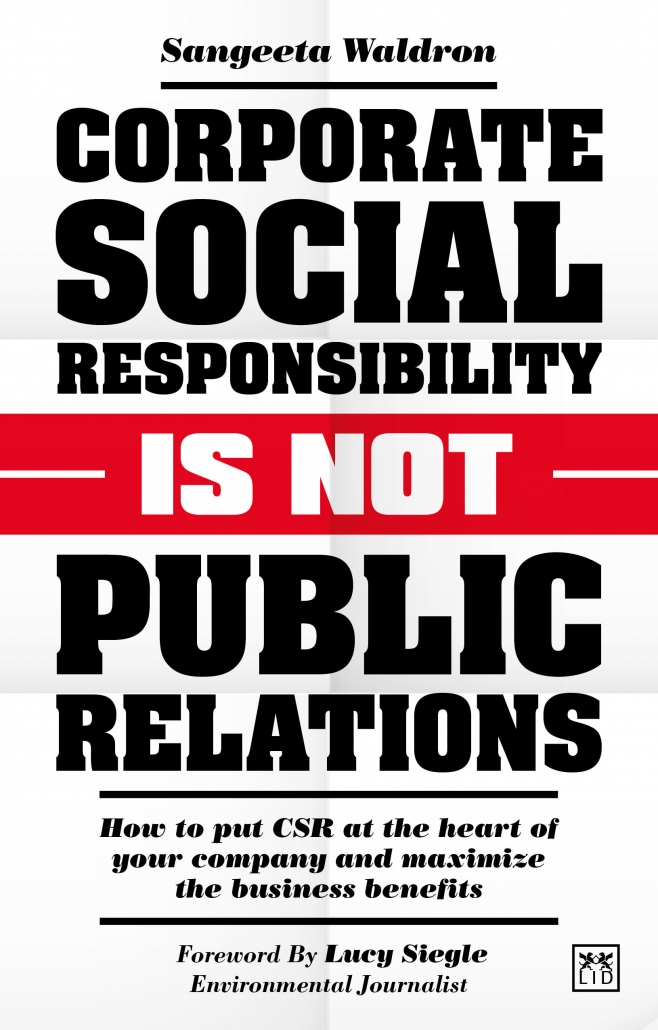
In my book, CSR Is Not PR, I explore the importance of moving beyond performative corporate messaging and towards genuine responsibility. Businesses today operate across borders, cultures, and communities, and because of this, CSR needs to be rooted in authenticity, cultural understanding, and a real commitment to social impact.

Why Inclusive CSR Matters

One of the key themes in my work is the importance of inclusivity in CSR. When companies expand internationally, they often encounter communities with very different social structures, cultural traditions, and priorities. A one-size-fits-all CSR strategy rarely works.

Organisations need to take the time to understand the communities they are operating in, which means listening to local voices, engaging with community leaders, and recognising the diversity within those communities. Inclusive CSR is about ensuring that initiatives are relevant, respectful, and genuinely beneficial for both parties.

When businesses involve local stakeholders in shaping their initiatives, they build trust and create programmes that are far more impactful and sustainable.

The Role of Cultural Intelligence in CSR

It is also important for companies to develop greater cultural intelligence in their CSR strategies. Cultural awareness is not simply about avoiding mistakes; it is about recognising the richness and diversity of the societies they are interacting with and considering the cultural context of their actions. CSR programmes should reflect local values and social realities rather than imposing external frameworks that may not resonate with communities.

In CSR Is Not PR, I discuss how meaningful CSR requires businesses to move away from superficial branding exercises and instead embed responsibility into the heart of their brand and corporate culture. When companies genuinely understand the local areas in which they operate, their initiatives become far more powerful and effective.

Creating Meaningful Global Impact

CSR has always been about long-term impact. Responsible businesses have the potential to support communities, contribute to social progress, and address global challenges. But this only happens when CSR is approached with authentic commitment.

Over the years, I have worked with organisations to help them think more strategically about their social impact. This includes encouraging transparency, accountability, and sustained engagement with communities rather than short-term campaigns designed primarily for visibility. True CSR requires businesses to ask deeper questions about their role in society and how they can contribute positively to the world around them.

Looking Ahead

As global challenges continue to evolve, the need for responsible corporate leadership has never been greater. I firmly believe that businesses can be powerful forces for good when they embrace inclusive and culturally informed CSR practices.

My work continues to focus on helping organisations understand that responsibility is not simply about reputation. As I explain in CSR Is Not PR, CSR should be embedded in how a company thinks, operates, and engages with the world.

When businesses commit to authenticity, respect cultural diversity, and genuinely collaborate with communities, CSR becomes more than a strategy; it becomes a pathway to lasting social impact.

The New Wuthering Heights Film Got Me Thinking

The new Wuthering Heights film got me thinking. Directed by Emerald Fennell, it is presented as a bold reinterpretation of Emily Brontë’s novel. But in Fennell’s version, Heathcliff, one of the main characters, has his identity changed. He is now white, played by Jacob Elordi.

In the 1847 novel, Brontë describes Heathcliff as a “dark-skinned gypsy” and even as a “Lascar,” a term used for South Asian sailors at that time. Both descriptions suggest he is a person of colour. That detail is not incidental; it is central to the novel’s themes of class, race, and social exclusion. Heathcliff is not simply an outsider because he is poor or orphaned; he is racialised as different. It shapes how he is treated, how he sees himself, and why his relationship with Catherine is so fraught. Catherine is white and socially ambitious; in that period of British society, relationships that crossed race and class boundaries were not simply frowned upon, they were virtually impossible. The latest series of Bridgerton explores the power of class well.

Yes, I understand the concept of artistic licence. Stories are retold. Perspectives shift. But we are living in sensitive and polarised times. ‘Othering’ is not abstract; it is real and persistent. Ethnic diversity remains a significant challenge, particularly in the media and communications industry, where representation often fails to reflect the wider workforce, and where senior leadership remains disproportionately white and privileged.

There is also a strong intersection between ethnicity and class, something Brontë instinctively understood. Research by Creative Access and FleishmanHillard UK in 2024 found that 73 percent of working-class respondents in the creative sector feel there is a lack of senior representation. Among Black and Asian respondents, that figure rises to over 80 percent. That is not a marginal issue; it points to a structural imbalance.

When we remove race from a story that is explicitly shaped by it, we are not being neutral. We are making a choice. And that choice has cultural weight.

Embracing ethnic diversity is not simply a moral gesture; it is a strategic and commercial necessity. Diverse teams are more innovative, more productive, and better able to connect with broader audiences. In a global digital economy where culture travels instantly and scrutiny is constant, authenticity matters more than ever.

We must also challenge deficit narratives. The subtle framing that suggests people from ethnic minority or working-class backgrounds are somehow less complex, less universal, or less commercially viable. This type of thinking seeps into casting decisions, commissioning choices, and leadership pipelines.

We need to stop “whitewashing” stories that were never white to begin with. We need different voices around the creative table and not as a tick-box exercise, but as genuine contributors with the power to influence decisions. Because I suspect that if Fennell’s team had been more socioeconomically and ethnically diverse, someone would have paused and asked a simple but important question: What does it mean to erase the very difference that drives this story? Reinterpretation should deepen meaning, not dilute it.

Photocredit: Wikipedia

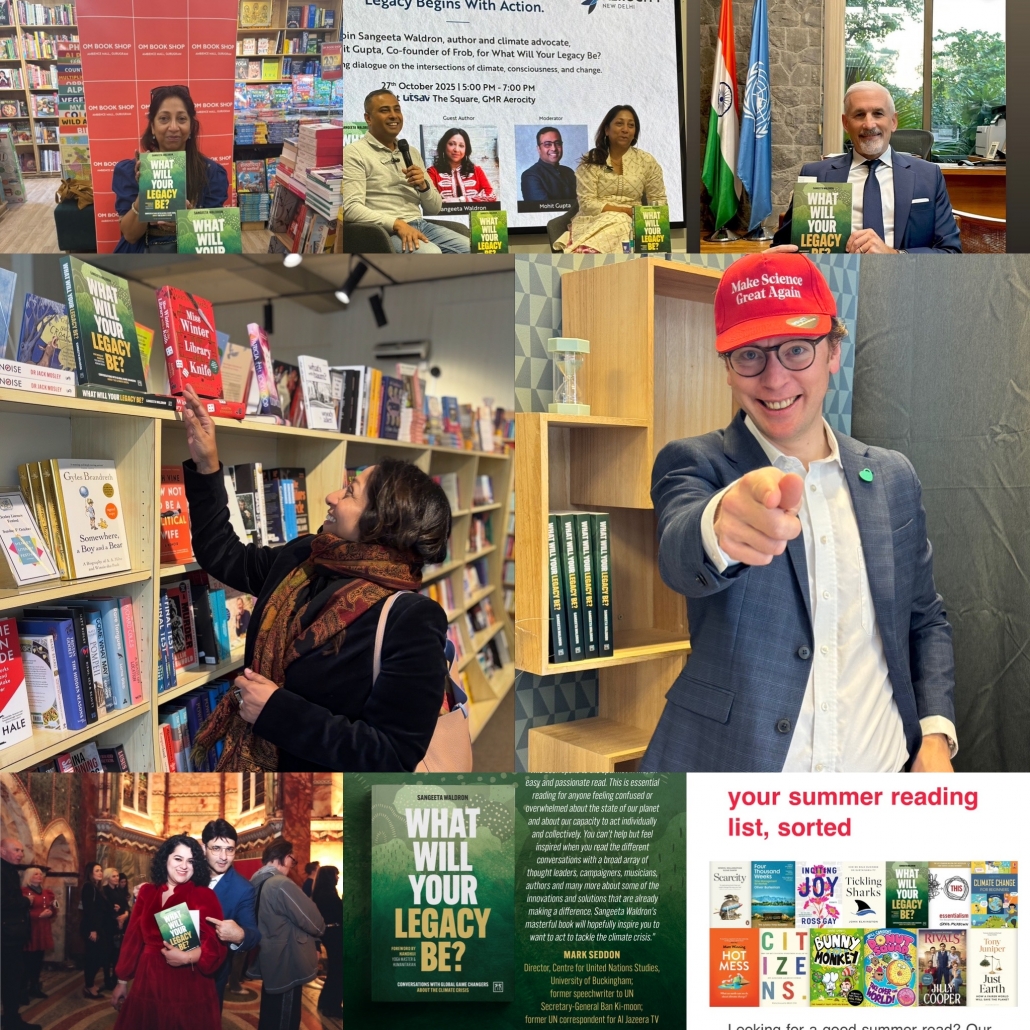
2025, A Year of The Book & Gratitude


As 2025 comes to a close, I’m reflecting on what an extraordinary book year it’s been. From launch to publication, this journey has brought new opportunities, meaningful conversations, and unforgettable moments along the way. It’s been a year of reminders…resilience, trusting the process, and remembering that every chapter, like every challenge, eventually turns the page.

I’m deeply grateful to everyone who supported this adventure: those who contributed to the book, read it, shared it, attended events, and engaged in conversation with me throughout the year. Thank you for being part of the story, the journey, and the celebration.

Booked Out in India: A Whirlwind October Tour

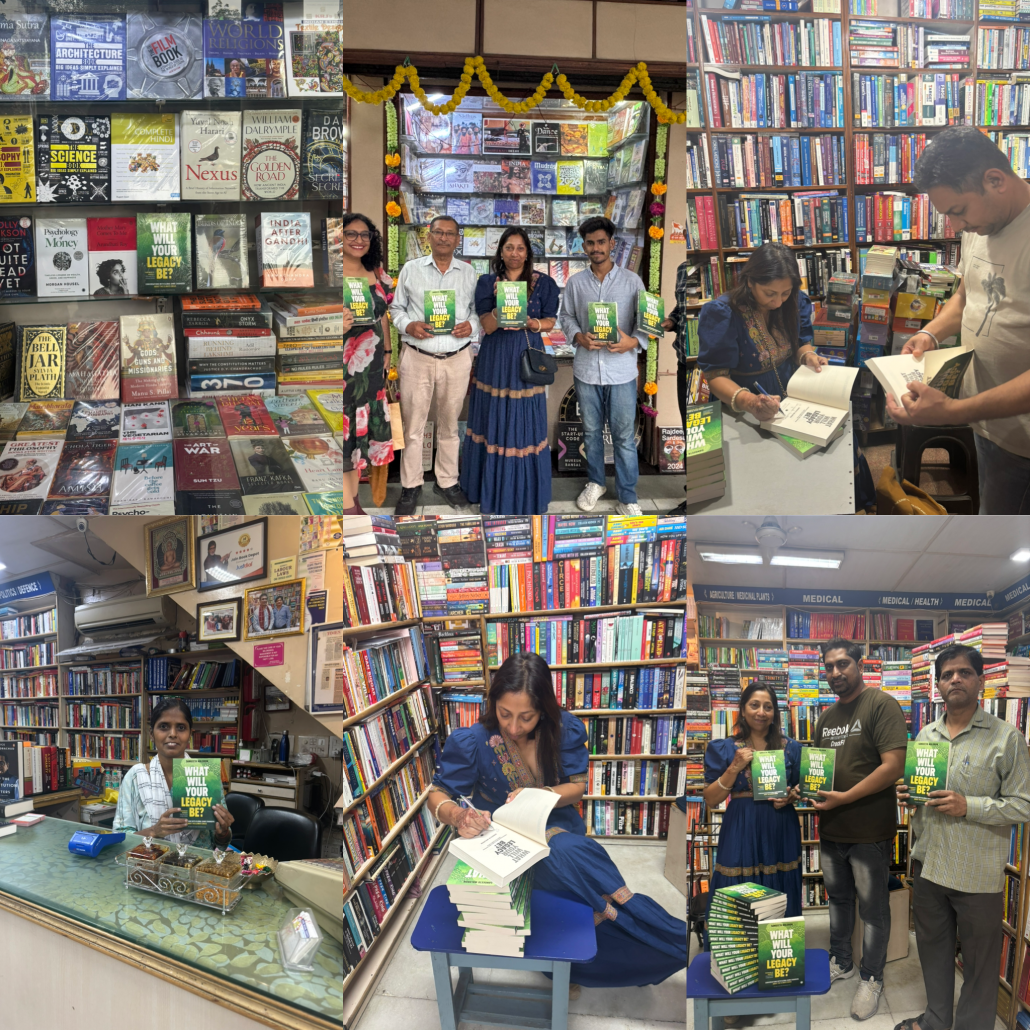
This October, I had the absolute joy of embarking on a whirlwind and unforgettable book tour across India. An experience that still feels a little like magic. The journey swept me from the lower ranges of the Himalayas, where the air feels sharp and ancient, all the way down to the geometric modernity of Chandigarh in Punjab, and finally into the vibrant, exhilarating capital, Delhi. By the end of it, I was well and truly booked out, and I wouldn’t have had it any other way.

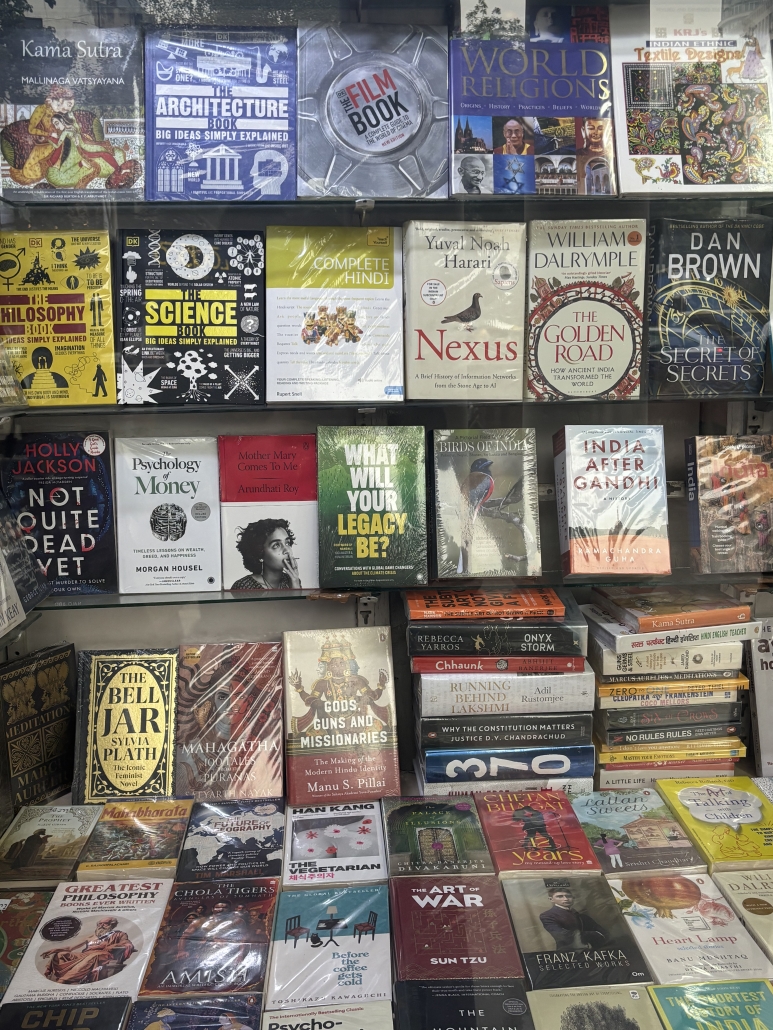
In Delhi, I stepped into some of the city’s oldest and most iconic bookshops. Places with creaking wooden shelves, bibliophiles drifting between aisles, and that unmistakable scent of paper and ink that makes you feel as though you have stepped back in time. To my amazement, I found my book proudly displayed in front windows, often right beside the incomparable Arundhati Roy. More than once, I stopped in my tracks, overwhelmed by the surreal joy of seeing my work shoulder-to-shoulder with a literary hero.

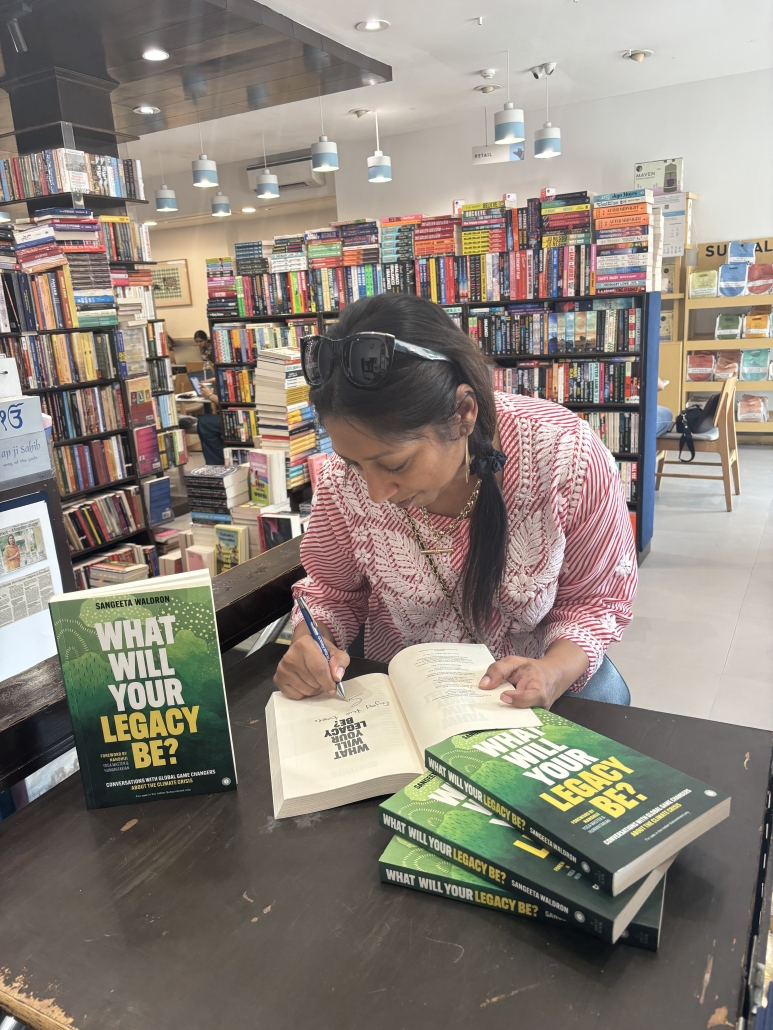
Over the course of the tour, I signed well over 200 books, where each signature for me was a small moment of connection with its future reader. There is an energy and a hunger for Indian readers to explore the urgency and humanity of climate issues through an Indian lens. The welcome I received was beyond anything I expected; I was made to feel like a literary queen!

I owe immense gratitude to my UK publisher, LID Publishing, and my Indian publisher, Jaico Publishing House, for orchestrating this incredible adventure. Their belief in the book is what carried it through mountains, cities, and countless conversations.

And here’s the biggest revelation I took away from every bookseller, every manager, every book counter I visited in Delhi and Chandigarh: India is readynot just ready, but eager for more books on the climate crisis that go beyond textbooks. Booksellers told me again and again that while climate literature exists, much of it is academic or technical. There are very few accessible narratives, personal explorations, or compelling stories about climate change set in or written for India. They are excited to champion my book because it fills a much-needed gap.

This tour wasn’t just a milestone. It felt like the beginning of a larger, deeper conversation, one I’m honoured to help spark.


Why Words Matter in Sustainability/Legacy


Here it is! I was invited to host a special episode of the podcast, Why Words Matter, which was focused on sustainability and legacy for 26: Membership Organisation. I was joined by brilliant guests, Emily Buchanan and Olivia Sprinkel.

Together, Emily, Olivia, and I explore what happens when nature is under stress. Where our words are no longer tools of communication, but instead become catalysts. We discuss how stories can stir empathy, and the right words can shape the world we want to protect.

We dive into climate grief, the art of listening to nature, and how words can shift heart, spark action, and keep hope alive.

Importantly, we find out what happens when we stop telling the stories that put us to sleep and start telling those that wake us up.

Listen here

Henley Literary Festival


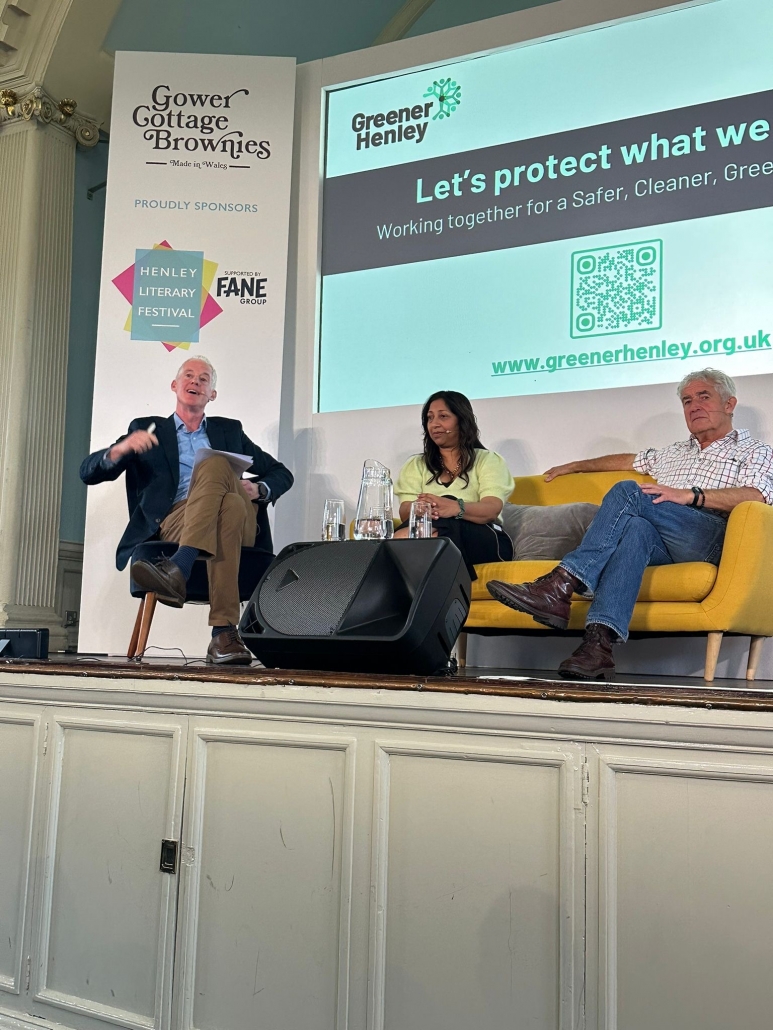
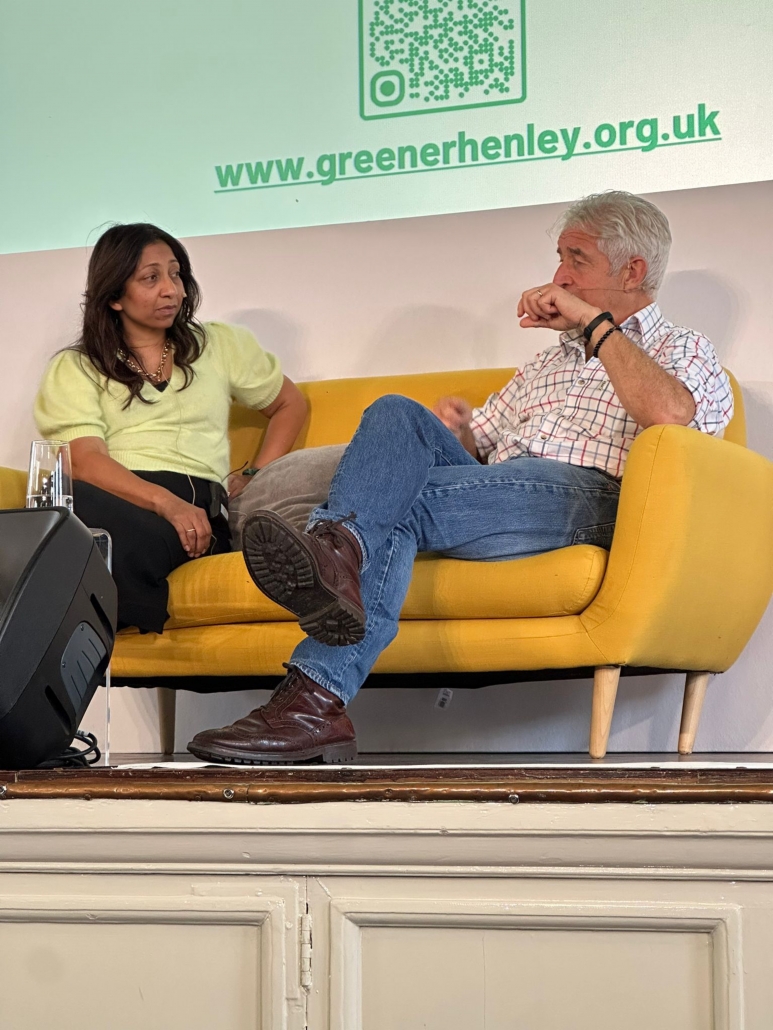
A fabulous Saturday afternoon spent with Henley Literary Festival in collaboration with A Greener Henley, talking about the climate crisis on 4 October at 4 pm. We had about 150 people in the room.

I was sitting on the yellow sofa alongside the brilliant Tony Juniper, CBE, British campaigner, writer, sustainability adviser, and environmentalist. Tony is currently Chair of Natural England, and hearing Tony was a treat whose warmth, wisdom, and deep understanding of our natural world truly inspired me.


This conversation wouldn’t have flowed or been possible without the insights and thoughtful questions from Mike Barry, former head of sustainability at Marks and Spencer. Mike focused on our books. Mine, What Will Your Legacy Be? and Tony’s, Just Earth.

People often ask, ‘What can I do about the climate crisis?’ The truth is, it starts with talking about it. Conversations like this one matter; it’s where change begins.

Science at the Heart of the Vatican’s Pan-European Climate Summit


The Vatican Pan-European Climate Resilience Summit, held from 28 to 29 August in Vienna, brought together mayors, youth leaders, scientists, innovators, and policymakers to tackle Europe’s most urgent climate threats. It was hosted by the Pontifical Academies of Sciences and Social Sciences with European partners; the summit spotlighted solutions in mitigation, adaptation, and societal transformation. Outcomes from Vienna will feed directly into the 2026 Vatican Global Summit, shaping a Universal Protocol for Climate Resilience to protect people and ecosystems across generations.

This was a Summit of hope, and one of the key participants was Ingmar Rentzhog, Founder and CEO of the global, pro-planet platform We Don’t Have Time. One of the things We Don’t Have Time did was to create a special video, which discusses the importance of facing the reality of the climate crisis and not denying scientific facts. This short film emphasises the need for people to speak up and take action, as the majority of the global population wants to address the issue.

Importantly, this film highlights the Vatican and the Pontifical Academy, which are working together to bring people from different backgrounds together to raise awareness and make a change. The video also mentions the inclusivity of the event and the importance of making science a priority.𝅺

And a highlight for me is that my book, What Will Your Legacy Be? – Conversations With Global Change-Makers About The Climate Crisis, has a walk-on part in the film. Can you spot it?


OmTalks: Legacy And The Wild with Sangeeta Waldron & Melvyn Carlile

On 17 June, I will be in conversation with the very brilliant Melvyn Carlile.

Mel is a visionary founder and the pioneering force behind the Mind Body, Spirit Festival, London. His work has helped to shape the modern holistic movement.

I could not be more excited about this event for many personal reasons. As a young girl of about 7, I used to be my mum’s plus one to the Mind Body Spirit Festival in London, held those days at Olympia. Never did I imagine that one day, I would be in conversation with the founder of this Festival about my book.

Life has just given me lemonade!

Tickets are only £4.50 and to book, click here

Indian Bestseller Nectar on the Seven Hills by Local Based Author Prabhu Ram to Be Published in the UK

Delighted to be working on this Indian bestseller, Nectar on the Seven Hills, by London-based author Prabhu Ram, To Be Published in the UK. Nectar on the Seven Hills has been compared to Harry Potter.

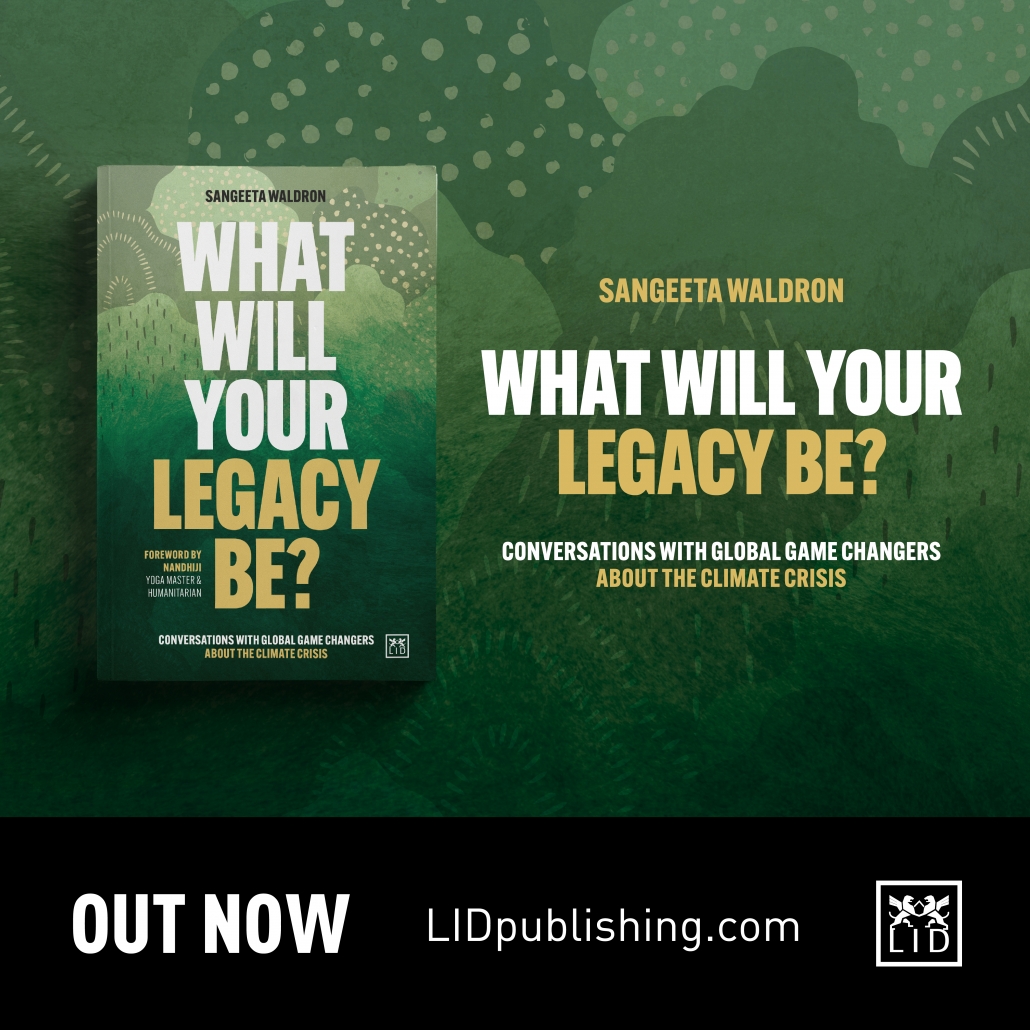
Announcing New Book, What Will YOUR Legacy Be? – Conversations With Global Game Changers About The Climate Crisis

My third book, What Will YOUR Legacy Be? – Conversations With Global Game Changers About The Climate Crisis is out on 30 January 2025 and is already receiving strong interest. I wrote to help readers to understand some of our biggest environmental challenges and how individuals, communities, organisations, and nations are restoring our planet. The book explores different themes – from science, food to the ocean, global politics, business, to the media, arts and music, communities, and more.

What Will YOUR Legacy Be? has a collection of conversations with thirty-six global influencers, thought leaders, and change-makers about the climate crisis and sustainability. The list of personalities and game changers includes a diversity of voices from – Ingmar Rentzhog, (CEO and Founder We Don’t Have Time), Julian Lennon (Founder, The White Feather Foundation and musician), Dr Kimberley Miner (NASA climate scientist), Rachel Cartwright (naturalist), Sunita Narain (Indian environmentalist and activist), and Nemonte Nenquimo (indigenous Waorani leader). In sharing their activities, wisdom, and knowledge, I present takeaway tips to inspire readers to become “climate change aware” and help create a sustainable mindset for themselves.

The book has received great endorsements from Mark Hoda, Chairman, The Gandhi Foundation, who says,“Gandhi told us ‘to be the change that we wanted to see in the world’, and Sangeeta’s book captures the spirit of Gandhi’s statement to remind us, that everyone can do something to help the planet. It starts with us.”

It has also been endorsed by Mark Seddon, Director, Centre for UN Studies, University of Buckingham. Former Speechwriter, UN Secretary-General, Ban Ki-moon, former UN correspondent, Al Jazeera TV.

What Will YOUR Legacy Be? is a book, where the reader goes on a journey to understand the profound changes that our planet is undergoing and to think about the legacy that they would like to make for future generations.