Posts

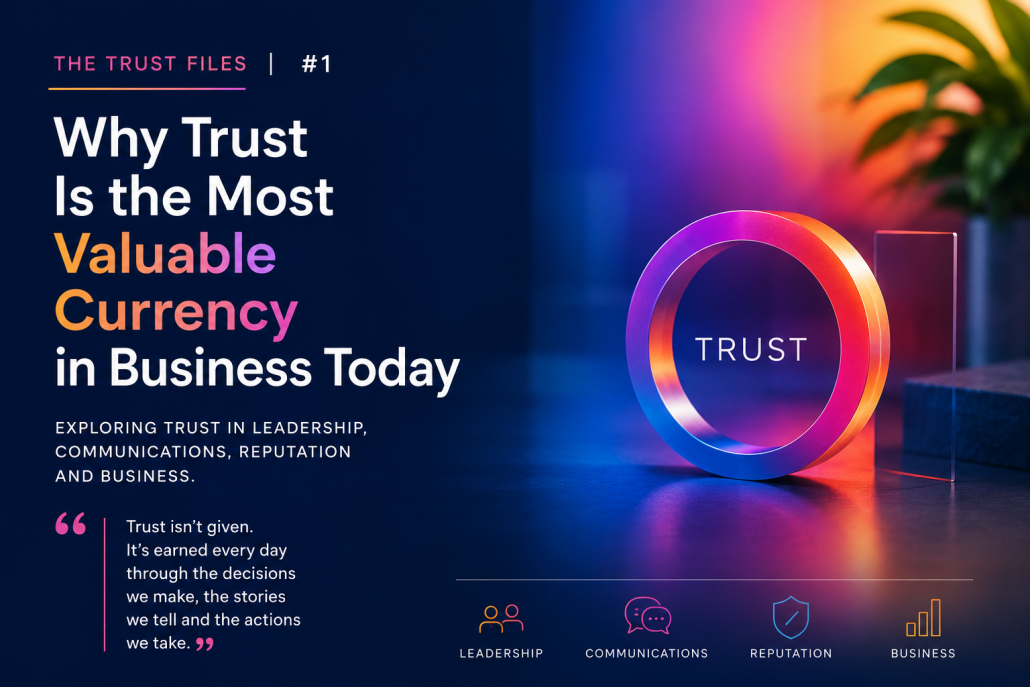
The Trust Files #1: Why Trust Is the Most Valuable Currency in Business Today
When I worked in the UK government writing ministerial briefings and speeches, every statement and every piece of data had to be verified. Nothing went unchecked. Everyone took responsibility for the information they provided by signing it off, creating a clear chain of accountability.

It wasn’t always the quickest process, and it was long before the convenience of email and instant messaging. But there was a respect for accuracy, attention to detail and the truth.

That experience has stayed with me throughout my career.

Today, when I work with organisations, I occasionally see leaders trying to cut corners. Often it’s done with the best intentions: to move faster, meet deadlines or reduce costs. But shortcuts create opportunities for misinformation, inconsistency and mistakes. Over time, they erode something far more valuable than efficiency: trust.

Trust is one of the greatest assets a business can have. It attracts talented people, strengthens customer loyalty, builds confidence with partners and investors, and protects an organisation’s reputation when challenges arise. It isn’t a communications campaign or a marketing slogan; it’s a business strategy.

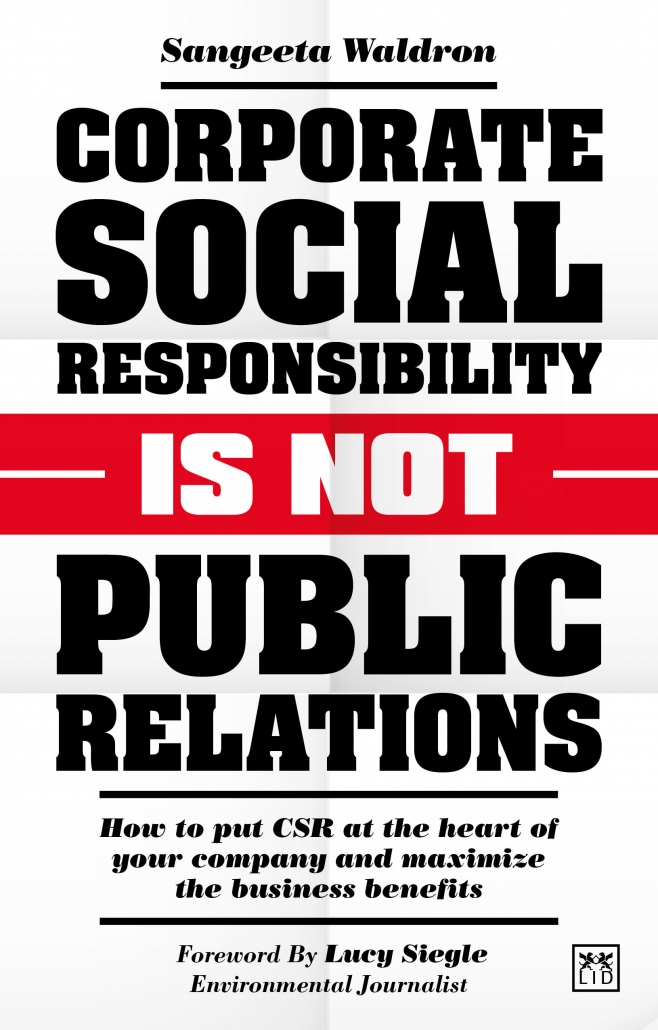
I explore this in my book Corporate Social Responsibility Is Not Public Relations; trust cannot be manufactured. It is earned through consistent actions, transparent communication, and leaders who do what they say they will do.

The good news is that building trust doesn’t have to be complicated or expensive. It requires commitment, clear processes and a culture where accountability is everyone’s responsibility. That means putting frameworks in place, encouraging openness and ensuring that people across the organisation understand not only what the business stands for, but how those values are reflected in everyday decisions.

One area that is often overlooked is internal communication. Organisations spend significant time and money communicating with customers yet forget that trust begins with their own people. Employees who understand the organisation’s purpose, values and direction become its most credible ambassadors. Without that internal foundation, external messaging can quickly lose its authenticity.

Trust isn’t built by one department or one leader. It is created collectively, through thousands of decisions and interactions every day.

Because in business today, trust isn’t just a nice-to-have. It is your most valuable currency.

The Trust Files is a monthly series exploring the role of trust in leadership, communications, reputation, and business.

If someone experienced your organisation today, as a customer, employee or partner, what would make them trust you?

Purpose-Driven Communication and Sustainable Branding in Global Markets


In today’s rapidly evolving global landscape, purpose-driven communication and sustainable branding have become essential for organisations seeking to build trust, credibility, and long-term influence. As the founder of Serendipity PR, I have always believed that communications should go beyond visibility and that it should create meaningful impact.

Businesses today operate in an environment where audiences expect more than traditional marketing. Consumers, investors, and stakeholders increasingly want to understand a company’s values, environmental commitments, and its broader role in society. This shift has made purpose-led communications and ESG (Environmental, Social and Governance) -focused storytelling central to how organisations connect with global audiences.

Why Purpose-Driven Communication Matters

Purpose-driven communication enables brands to communicate not just what they do, but why they do it. When a company’s mission, actions, and messaging align, it creates authenticity, and authenticity builds trust.

At Serendipity PR, our work focuses on helping organisations clearly articulate their purpose. This means developing strategic communications that highlight genuine commitments to sustainability, social responsibility, and positive change.

Rather than simply adding sustainability language to marketing campaigns, purpose-led branding requires a deeper alignment between business strategy and communications. When done effectively, it strengthens brand reputation, builds credibility, and creates stronger relationships with stakeholders.

Sustainable Branding in a Global Marketplace

Working across international markets has reinforced an important lesson: sustainability and brand purpose must resonate across cultures and regions.

While environmental and social priorities may vary globally, the demand for responsible and transparent organisations is universal. Businesses that integrate sustainability, ESG principles, and responsible leadership into their branding are increasingly recognised as forward-thinking and resilient.

Strategic communications play a crucial role in ensuring that these commitments are communicated clearly and authentically. By tailoring narratives for different audiences while maintaining a consistent global message, organisations can successfully engage stakeholders across markets.

The Role of Strategic PR in ESG and Sustainability

Public relations today sits at the crossroads of brand reputation, sustainability, and corporate purpose. Effective ESG communications help organisations demonstrate accountability while also highlighting their positive contributions.

Through strategic storytelling, businesses can share how they are addressing issues such as:

  • Climate action and environmental responsibility
  • Ethical supply chains
  • Social impact and community engagement
  • Responsible leadership and governance

These narratives not only strengthen brand perception but also inspire wider conversations around positive change.

The Future of Sustainable Communications

Looking ahead, the future of global communications will be defined by transparency, responsibility, and purpose. Organisations that integrate sustainability into their business strategy and communicate it authentically will be best positioned to thrive in an increasingly values-driven marketplace.

For me, communications has always been about storytelling. But the most powerful stories are those rooted in real action and genuine impact.

At Serendipity PR, our mission is to help organisations tell those stories; stories that connect with global audiences, inspire trust, and contribute to a more sustainable future.


Photo Credit: https://sustainability-directory.com/ 

The Cultural & Social Impact of Inclusive CSR Practices Across Diverse Global Communities

Corporate Social Responsibility (CSR) has changed dramatically over the years, especially during the global pandemic. What was once often treated as a marketing exercise or philanthropic add-on has become a critical part of how organisations operate, lead, and engage with society. Throughout my career, I have always focused on advocating for CSR practices that are not only responsible but also inclusive and culturally aware.

In my book, CSR Is Not PR, I explore the importance of moving beyond performative corporate messaging and towards genuine responsibility. Businesses today operate across borders, cultures, and communities, and because of this, CSR needs to be rooted in authenticity, cultural understanding, and a real commitment to social impact.

Why Inclusive CSR Matters

One of the key themes in my work is the importance of inclusivity in CSR. When companies expand internationally, they often encounter communities with very different social structures, cultural traditions, and priorities. A one-size-fits-all CSR strategy rarely works.

Organisations need to take the time to understand the communities they are operating in, which means listening to local voices, engaging with community leaders, and recognising the diversity within those communities. Inclusive CSR is about ensuring that initiatives are relevant, respectful, and genuinely beneficial for both parties.

When businesses involve local stakeholders in shaping their initiatives, they build trust and create programmes that are far more impactful and sustainable.

The Role of Cultural Intelligence in CSR

It is also important for companies to develop greater cultural intelligence in their CSR strategies. Cultural awareness is not simply about avoiding mistakes; it is about recognising the richness and diversity of the societies they are interacting with and considering the cultural context of their actions. CSR programmes should reflect local values and social realities rather than imposing external frameworks that may not resonate with communities.

In CSR Is Not PR, I discuss how meaningful CSR requires businesses to move away from superficial branding exercises and instead embed responsibility into the heart of their brand and corporate culture. When companies genuinely understand the local areas in which they operate, their initiatives become far more powerful and effective.

Creating Meaningful Global Impact

CSR has always been about long-term impact. Responsible businesses have the potential to support communities, contribute to social progress, and address global challenges. But this only happens when CSR is approached with authentic commitment.

Over the years, I have worked with organisations to help them think more strategically about their social impact. This includes encouraging transparency, accountability, and sustained engagement with communities rather than short-term campaigns designed primarily for visibility. True CSR requires businesses to ask deeper questions about their role in society and how they can contribute positively to the world around them.

Looking Ahead

As global challenges continue to evolve, the need for responsible corporate leadership has never been greater. I firmly believe that businesses can be powerful forces for good when they embrace inclusive and culturally informed CSR practices.

My work continues to focus on helping organisations understand that responsibility is not simply about reputation. As I explain in CSR Is Not PR, CSR should be embedded in how a company thinks, operates, and engages with the world.

When businesses commit to authenticity, respect cultural diversity, and genuinely collaborate with communities, CSR becomes more than a strategy; it becomes a pathway to lasting social impact.

Shedding Light on The Challenges Marketing Teams Face On Their Net Zero Journey

I was privileged to be part of a panel discussion with experts on 6 December 2023, where we shed light on the challenges sales & marketing teams in B2B organizations face on their journey to Net Zero – based on the latest business research commissioned by Hattrick in partnership with The Carbon Literacy Trust.

We delved into some of the complexities businesses are navigating and discussed what’s needed for organizations to make genuine progress on their sustainability journey.
Facilitated by Josh Pitman from Priory Direct, the panelists were:
– Phil Korbel, Co-founder/Director of Advocacy at The Carbon Literacy Project
– Sangeeta Waldron, Founder/Owner of Serendipity PR & Media and author of the acclaimed book ‘Corporate Social Responsibility is not Public Relations’
– Christos Tsaprounis FCIPD (he/him), People & Culture Leader, Auto Trader UK
– And Malin Cunningham, Founder/Owner of Hattrick | B Corp™ certified
You can watch here:

Download the report here!

Podcast – Where Does It Come From


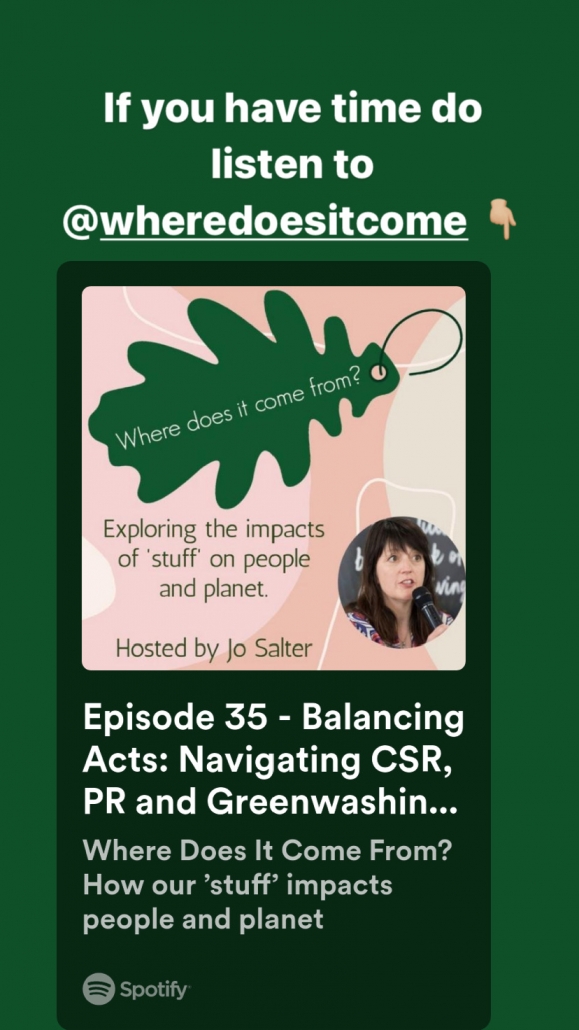
They say there’s no rest for the wicked and it’s true! Soon after the Business Show, I did a podcast conversation with Jo Salter, host of the Where Does It Come From podcast about greenwashing, corporate social responsibility (CSR), fast fashion, the power of local communities, fake news, and of course my book, CSR Is Not PR.

So if you have time, do have a listen to my dulcet tones and let us know what you think!

Come See Me At The Business Show – 22 & 23 November, 2023


I will be in the hot seat with business journalist Ben Walker at The Business Show in London on 22 November at 1.15 pm in Theatre 7 at London Excel, talking about CSR Is Not PR. This will be a lively conversation, and we will be getting the audience involved!

This year the Business Show has a strong sustainability theme and quite rightly so! Businesses need to get with the programme and understand why being CSR-led, eco-friendly, sustainable, and ethical is extremely good for business and really no longer an option.

Ben serves as editor-at-large of Dialogue Review, the official leadership and management journal of Duke Corporate Education, published by LID business media…and there will be free copies of Dialogue for the audience.

So come join us and be part of the conversation. Copies of my book, Corporate Social Responsibility Is Not Public Relations will be available.

Threads of Change 2023 DAY 3 – Responsible Business and Co-creation


I am delighted to be able to participate in the Threads of Change event that is being organized by Khadi London and Chelsea College at the prestigious Nehru Centre in London, where I will be talking about corporate social responsibility and the themes from my book CSR Is Not PR. This is a free event that runs over five days, from 16 to 20 October.

Natural fibres, regenerative practices and heritage textile crafts all have a key role to play as the world faces choices in its journey towards a sustainable future…could the fashion and textiles industry drive the change, thread by thread? This curated exhibition is aimed at everyone, from those in the global fashion and textiles community to all of us as consumers who want to see revolutionary change and who recognise our collective power to make it happen. This is where CSR comes in as we as consumers are voting with our wallets and want to buy from businesses and brands that care about the planet.

Khadi London is a UK-based social enterprise focusing on sharing knowledge and skills in regenerative textiles. This five-day event will feature a range of discussions from the regenerative production of fibres to talks from businesses working with these fibres to the steps that must happen to enable the wider adoption of these approaches. Craft Demonstrations including natural dyes, spinning and block printing will be a part of the exhibition.

Each day is themed as follows:

Monday & Tuesday – Climate Change and Social Justice

Wednesday – Responsible Business and Co-creation

Thursday – Education, Heritage, and Culture

Friday – Culture and Inclusive Eco-System

I will be speaking on Thursday 19, between 3.30 pm to 4.30 pm and you can find out more and book tickets here on eventbrite.

Photo credit: Khadi London

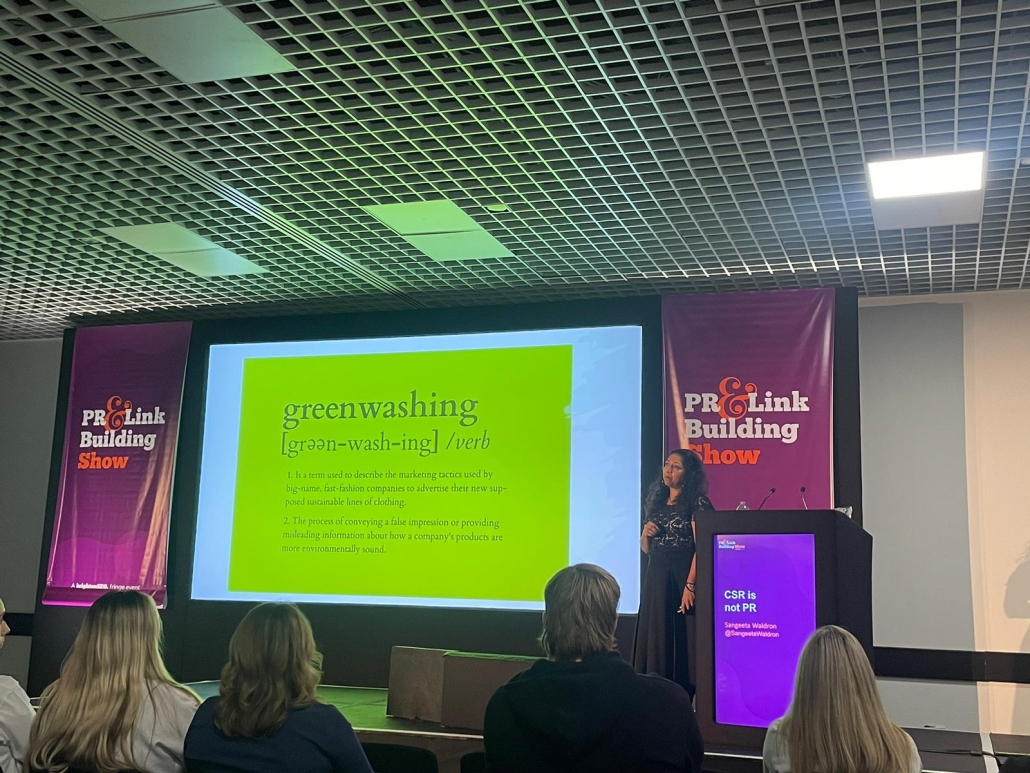
CSR Is Not PR At The PR Link Building Show Brighton


Last week on 13 September I was at the Brighton SEO conference, the largest PR industry show that ran from 13 to 15 th. I was delighted to speak to my industry about how Corporate Social Responsibility (CSR) is shaping PR campaigns, forcing brands to take a long hard look at themselves and their purpose.

And I am pleased to say that CSR Is Not PR was well received by the PR community. Sir David Attenborough has called the plight of the planet a communications issue and yes it does start with us in the media industry…we can help brands be more accountable, to do better, and be authentic about their values and storytelling. There is no room for any business or brand to be making up fairytales, as that’s just greenwashing. Consumers are savvy and voting with wallets, loyal to brands and businesses that are eco-friendly, ethical, and doing right by the environment. After all, there is no business without the planet.

On World Book Day, At The World Book Fair 2023


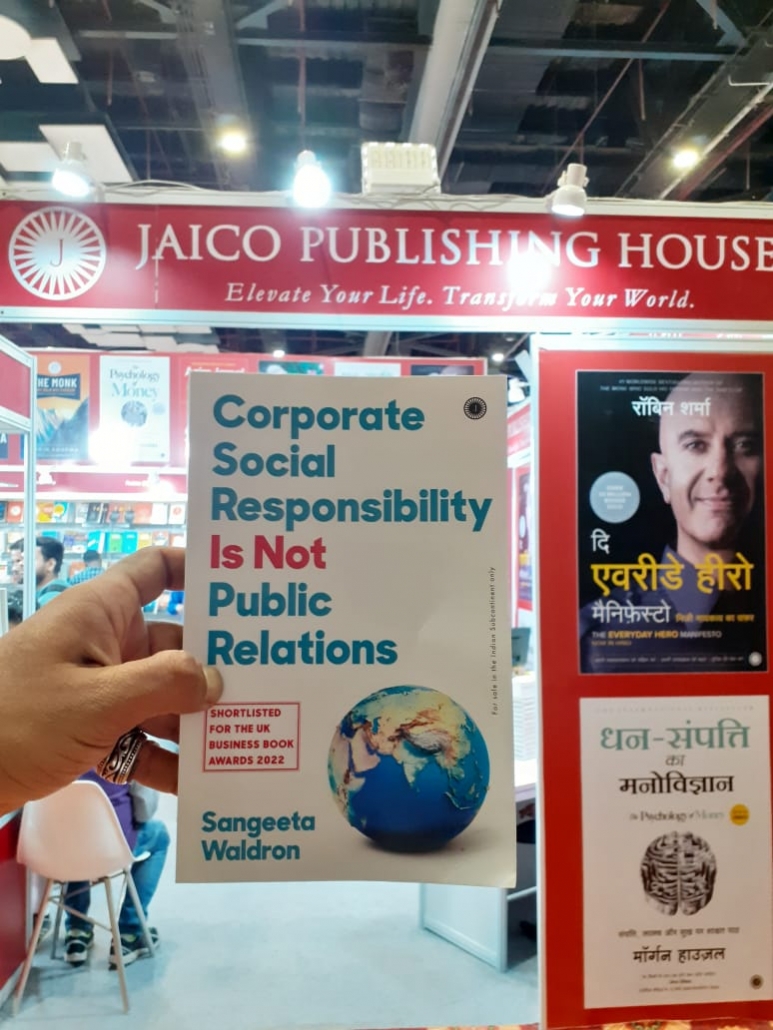
Nothing, and let me say again, nothing gives an author more joy than seeing their book being read, being with book lovers, on bookshelves, and being at book fairs. So, this photo received today, sent by my publisher was special and they have been making sure the book got all the spotlight it deserves at the World Book Fair happening in Delhi this week, which ends on 5 March.

This book has its own energy, it makes things happen and can be bought on Amazon UK and Amazon India.

This is the 31st edition of the New Delhi World Book Fair (NDWBF), which began on February 25 and has been organised by the National Book Trust (NBT) in collaboration with the India Trade Promotion Organisation (ITPO). The event has invited France as its guest of honour and will be attended by a total of 16 French authors, including Annie Ernaux, the 2022 Nobel Prize in Literature winner.

This year’s theme of the Fair is based on Azadi Ka Amrit Mahotsav, an initiative of the Government of India to celebrate and commemorate 75 years of independence and the glorious history of its people, culture, and achievements.

NDWBF was first held in 1972 after it was inaugurated by the then-President of India VV Giri.  Today, it’s one of the biggest literary events in the world with a total footfall of over two million people.

Corporate Social Responsibility Is Not Public Relations – Out In India


I hope everyone has had a good Christmas and now enjoying the time off before we hurl ourselves into 2023. I thought I would take this quiet moment of reflection between Christmas and the New Year to get around to updating everyone about my book, Corporate Social Responsibility Is Not Public Relations, which was published in India on 23 November 2022 by Jaico Publishing.

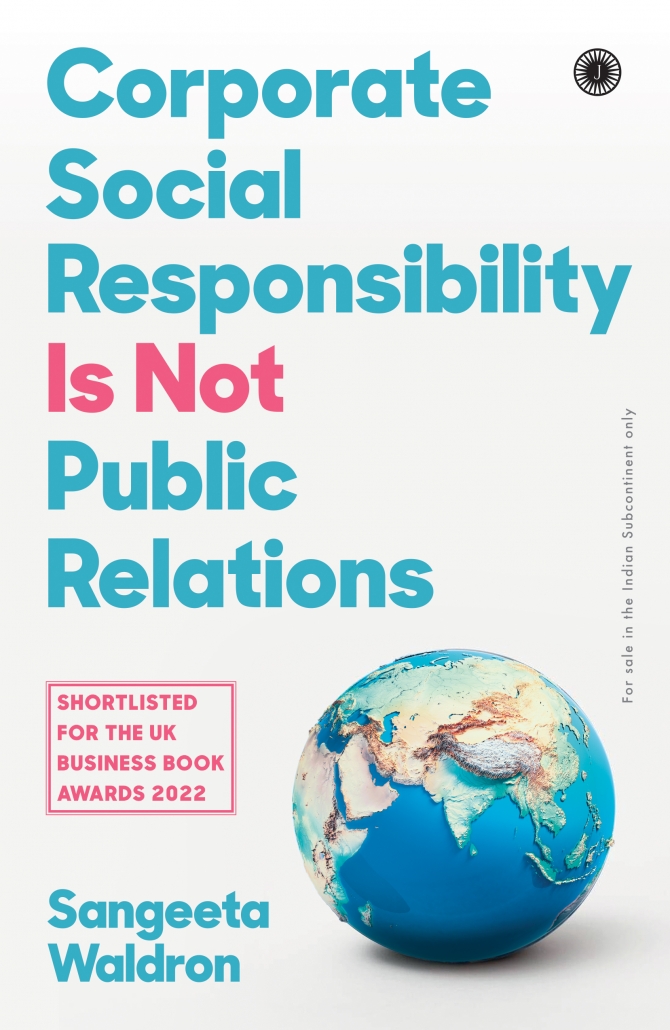
You will immediately notice that the book has a different cover and is one that has been designed to suit the Indian market. I just love the way on the front cover, if you notice, the line that says ‘For sale in the Indian Subcontinent only’ – that to me, makes this my book extra special. On a personal note, to have my book published and sold here, is a fairy tale come true. I spent my teenage and young adult life in India, where we had books published by Jaico on our bookshelves. Never in my wildest dreams, did I think that one day, I too would have my book published by the highly regarded publishing house.

I wanted to make this edition of the book special, and I decided to include three new interviews with business leaders that will be of interest to the market here. One interview is with an award-winning luxury British Ayurvedic wellbeing brand that has a strong Indian heritage; the other is with one’s of France’s influential ESG and CSR thought leaders and activists, who has worked in India, and the third interview is with a multi-award-winning Indo-German sustainable fashion brand that is doing great things.

I could not be prouder to have my book published in India, a country that was the first in the world to implement a national CSR law in 2014. A region that is a superpower, and has the fifth largest economy in the world, according to the International Monetary Fund. This means my book could not be timelier, because it is now vital for all national and international brands and businesses in India, to authentically commit to their CSR initiatives and build CSR into the heart of their brands and business strategies, and my book explains how to do this with purpose.

The Indian Government has started to raise consumer awareness, with its efforts toward reducing the country’s carbon footprint. Currently, India is the world’s third-largest emitter of carbon dioxide, after the US and China. According to an Associated Chambers of Commerce and Industry of India and PricewaterhouseCoopers International report, landfills are brimming with so much urban waste that by 2050, India is going to need a landfill that’s the size of its capital, New Delhi. Indian consumers aren’t ignoring these horrifying numbers anymore.

More and more consumers are becoming aware of their choices and realising that whether it is clothes that they decide to throw away, nothing ever really goes ‘away’, it all ends up in a landfill. Human activities are clearly harming the global environment and brands have no choice but to migrate to sustainable solutions and work towards building a circular economy. Information is not only to educate people about environmental issues but also to guide them on how they can make a difference every step of the way.

In October 2022, PM Modi launched Mission LiFE movement (Lifestyle for the Environment), which is an India-led global mass movement that will nudge individual and collective action to protect and preserve the environment. PM Modi said the mantra of Mission LiFE is ‘Lifestyle for Environment’ and “Connects the powers of the people for the protection of this earth and teaches them to utilize it in a better way. Mission LiFE makes the fight against climate change democratic, in which everyone can contribute within their capacity. It inspires us to do all that can be done in our everyday life to protect the environment…and that the environment can be protected by making changes in our lifestyle.”

PM Modi added that the mission emboldens the spirit of the P3 model, Pro Planet People, uniting the people of the earth as pro planet people, uniting them all in their thoughts. It functions on the basic principles of ‘Lifestyle of the planet, for the planet and by the planet’…making my book both timely and relevant to the Indian market. Jai Hind!